

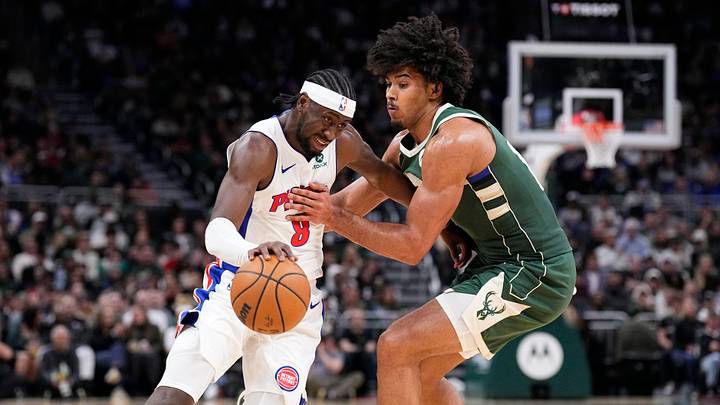
The most locked-in Milwaukee Bucks fans know that their team has to win on the margins this summer and have been patiently awaiting the team's next deal. But modern NBA free agency looks a lot different from how it used to. Most of the biggest moves are finalized through sign-and-trades or side arrangements, making salary dumps a more important tool than ever by offering teams the flexibility they need to win the summer. That's exactly what the Bucks took advantage of by trading Taurean Prince and Gary Harris to the Detroit Pistons for Caris LeVert and two second-round picks.
It may not sound like such a savvy move, acquiring a 31-year-old journeyman whose shooting splits tanked on a No. 1 seed Pistons team last year. But in reality, it's the exact type of trade that Bucks GM Jon Horst needs to make this summer, leveraging the team's cap flexibility and plethora of young, cost-controlled talent to rebuild his war chest of draft assets.
Not long ago, the Bucks were completely devoid of second-round picks. Now, they have four of them. That alone is a massive win as second-rounders grow increasingly valuable with the league's restructured draft lottery system and the rising importance of keeping your own firsts.
But the doors that this trade opens from a business perspective are enough to keep Bucks fans foaming at the mouth for more deals and even potential additions in free agency.
The Milwaukee Bucks' trade for Caris LeVert is a massive win because of the intricate details of the NBA's salary cap.
As pointed out by NBA Salary Cap expert Yossi Gozlan, the combined outgoing salaries of Prince and Harris' contracts line up with LeVert's incoming $14.8 million salary in a way that, by league rules, allows them to maintain their full mid-level exception and the $25.4 million trade exception created in the Giannis Antetokounmpo trade.
In a vacuum, this means Horst and the Bucks were able to absorb an expiring contract — one that's certainly an overpay, but isn't enough to harm the team's ap sheet — while acquiring assets and maintaining the flexibility to do it again later in the summer.
It also signals that Milwaukee is willing to hear offers on its veteran players and find ways to stockpile assets to help rebuild its treasure trove while establishing a genuinely fascinating young core. It's one of the greater pivots we've ever seen from a team that just traded its franchise star, and puts them in a position to rebuild even without control of their own first-round picks in the years to come.
Milwaukee has been through a lot in the basketball realm over the last few months. It's hard for fans not to have conflicting feelings about everything that's gone down. But every single move they've made, starting with the Giannis trade, through the draft and the early stages of free agency, has signalled confidence and competence that the fanbase desperately needed to see to keep the hope alive.
Even without Giannis, next season is going to be one of the most fascinating and entertaining Milwaukee Bucks seasons since the title run, and the first step toward whatever the next great iteration of this franchise will look like. Winning with deals on the margins like this is how you get back to the promised land, so long as you're willing to play the long game.
 Add us as a preferred source on Google