

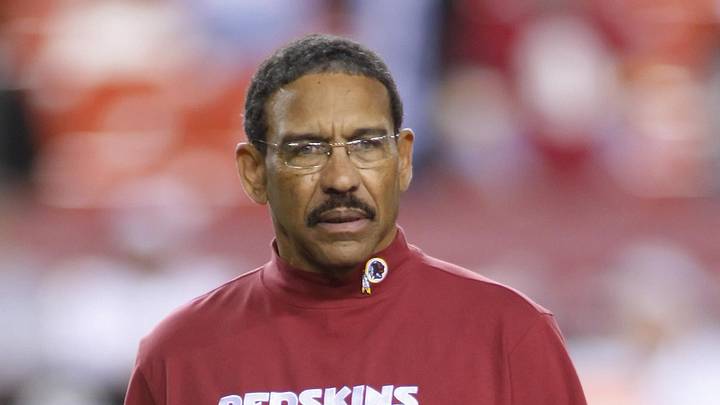
Saying goodbye is never easy — especially when it’s someone who left such a lasting impression across a massive community like the NFL. It’s sadly time to say goodbye to former Green Bay Packers offensive coordinator Sherman Lewis, who passed away on Friday at the age of 83, as first reported by the Detroit Free Press.
His coaching career took off in 1969, when he joined the staff at his alma mater, Michigan State. Lewis coached the Wolverines for 13 seasons as an assistant before making the jump to the pros. From 1983-91, Lewis was an assistant coach for the San Francisco 49ers, working with running backs and wide receivers. During that time, Lewis was part of three Super Bowl champion teams.
Lewis’ success in the Bay Area was a springboard for a long and storied career as an offensive coordinator, joining the Green Bay Packers' staff in 1992. He became a Super Bowl champion once more in 1997, when the Packers defeated the New England Patriots for their third Super Bowl victory, and the franchise’s first title in nearly 30 years.
Lewis left a significant mark on NFL history for both his coaching contributions and the values he embodied. He, alongside Ray Rhodes in Green Bay, was part of the first duo of Black coordinators in NFL History. Often, high-ranking Black coaches were not officially listed on the team staff, and very few had been hired at all in the league's history.
He’ll always be remembered fondly for his heart, passion, and ability to connect with players, but there’s an argument to be made that his legacy should extend even further.
Sherman Lewis was more than qualified to be an NFL coach, but he never got his chance.
I don’t know if there’s any better credential to be an NFL head coach than winning multiple Super Bowls in different roles with several franchises. There are only a handful of people in the history of the game with such a pedigree, and most of them were able to leverage that into head coaching jobs. There’s absolutely nothing wrong with being a career coordinator, but Lewis was overlooked and underrated through dozens of head coaching searches, simply because of his race.
The NFL has come a long way in breaking down barriers for people of color in the sport but there's still plenty of work left to be done. Lewis' incredible legacy should serve as a reminder that people with invaluable leadership abilities are often suppressed by the bureaucracy and prejudice of high-ranking decision makers. Just because 'The Rooney Rule' now exists doesn’t mean there aren’t still people trying to keep qualified candidates out of these roles based on factors that have nothing to do with football.
Lewis reckoned with this idea back in a 2015 interview with Martin Hendricks of the Milwaukee Journal Sentinel, and seemed to be at peace with how his career panned out.
“No question, I wished I had the chance to be a head coach. But looking back, I did all I could,” Lewis said. “ I was disappointed, but I’m not going to hang my hat on that. I had a great career and was fortunate to coach in the NFL.”
Lewis’ humility and dedication to his craft are traits that all aspiring coaches should learn from. He knew that the cards were stacked against him — even when the coaches he directly worked with advocated for him to attain a head coaching role of his own. Lewis never got to fulfill that dream, even though he rightfully deserved to. Life is often unfair, and unless you’re coming at it from a position of privilege, it’s always going to throw hurdles in the way of your dreams.
From the way he tells his story, it seems like Lewis was never bitter and kept an upbeat perspective on the situation. The fruits of his labor paid off with a historic coaching career that made him revered in football circles from coast to coast. He was a phenomenal leader and a role model for those who followed him.
May he rest in peace, and may the invisible barriers that kept him from becoming a head coach be shattered forever so that great leaders can rise to the top.
 Add us as a preferred source on Google